
We Must Create - A first Call to Action
As part of joining the wide and generous global community of wedotart, and writing from my base here in London, I’ve been thinking a lot lately about why making matters, not just as creative expression, but as a way of grounding, connecting and being well in a world that increasingly demands we “produce” value, impact, meaning, sustainability and solutions all at once.
I have a mantra that keeps returning to me, it’s We Must Create, but it’s not just about art as a product, it’s about art as a kind of portal: a way into presence, connection, and collective imagination. And it isn’t limited to any one discipline. We Must Create is a call to everyone, whether through film, poetry, dance, painting, writing, singing, building, cooking, stitching, or drawing. The warp may be my canvas at the moment, but creativity belongs to all of us. Making permits us to think by doing, to slow down, to commune, and to let insight arise through our hands as much as through our minds.
Intuition aside, there is growing evidence that creative engagement has physiological benefits. For example, participatory visual art activities have been shown to significantly reduce full-day heart rate and cortisol levels, a beautiful proxy for better balance between stress and rest systems in the body. This was in older adults who took part in regular art-making sessions over three months (1).
More broadly, creativity and cultural engagement are linked with improvements in well-being, life satisfaction, and emotional regulation in large population samples (2).
This embodied act of doing, feeling, and sensing echoes the wisdom of Joanna Macy’s work around cultivating Active Hope (3). Otto Scharmer’s (4), and Janine Benyus’s invitation to “learn from nature rather than extract from it” (5) reminds us that life has been solving problems for 3.8 billion years, and that by observing, making with, and learning from living systems, we begin to design not against the world, but in partnership with it.
Macy speaks of reconnecting with life at multiple scales, self, other, planet, and of turning toward what wants to emerge. Scharmer’s concept of presencing describes learning from the future as it emerges through our bodies and minds in dialogue and practice. These ideas aren’t soft; they describe the conditions that allow resilience, imagination, and agency to flourish.
I see this in the workshops I lead, whether in Dalston Curve Garden or elsewhere, when people settle into the act of making and suddenly something shifts: the worry relaxes, the mind opens, and a deeper kind of thinking emerges through the hands. Thinking by making isn’t escapism; it’s cognitive and emotional recalibration in the face of complexity, uncertainty, and burnout.
For me, making is a form of well-being and care for our minds, each other, and the world we inhabit. It is a starting point for connection rather than a finished product. We Must Create - is an invitation to practise art daily, to make connections and collaborations, to embody presence, and to find wellbeing through collective practice.
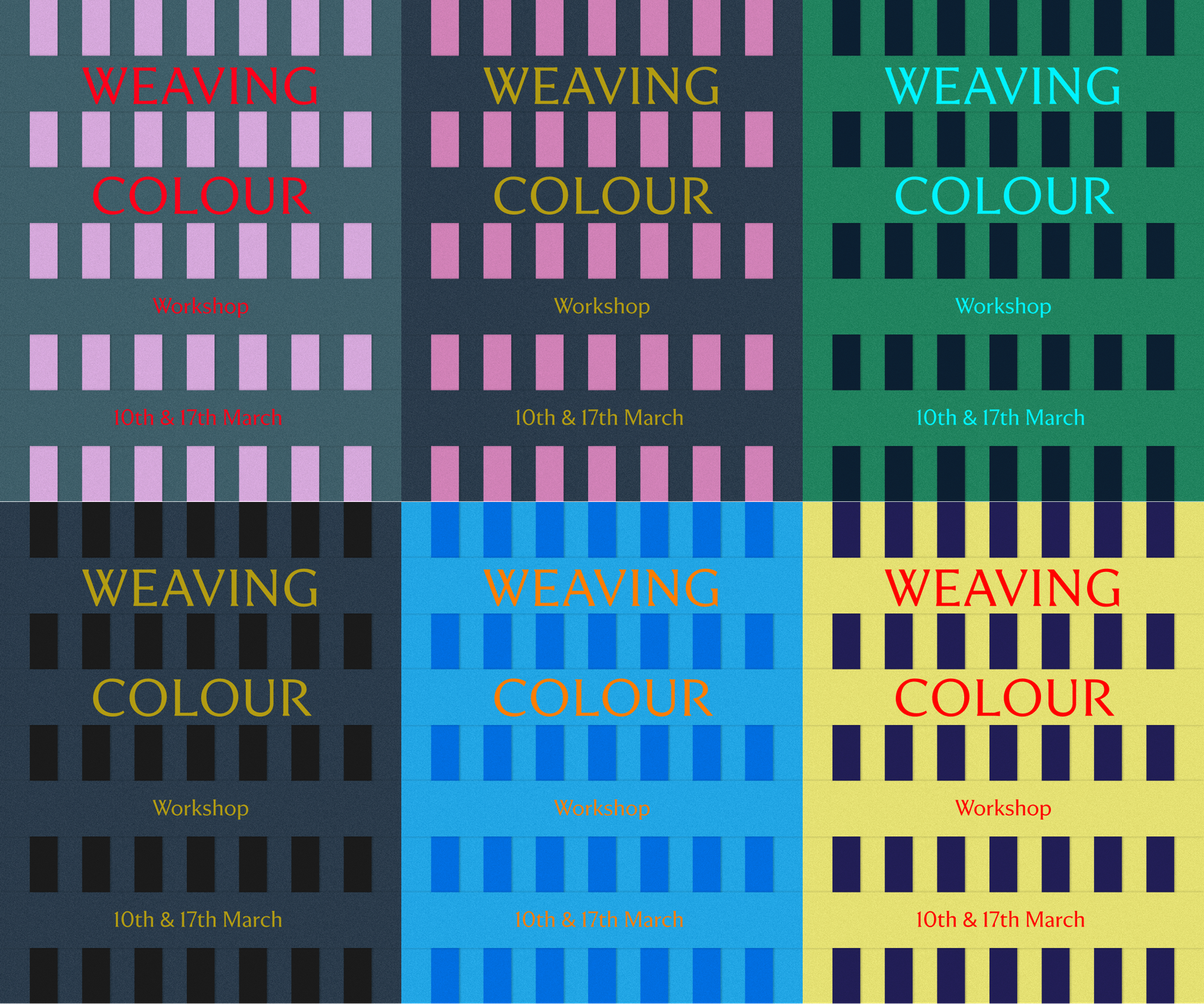
If you are in London, come to the workshop in March, or get in touch with me here #WeMustCreate!
(1). PMC study on art-making,
(2). Dr Helen Keyes, UK wellbeing research on arts and life satisfaction, The Guardian
(3). Joanna Macy, Active Hope.
(4). Otto Scharmer, Theory U
(5). Janine Benyus Learning from Nature